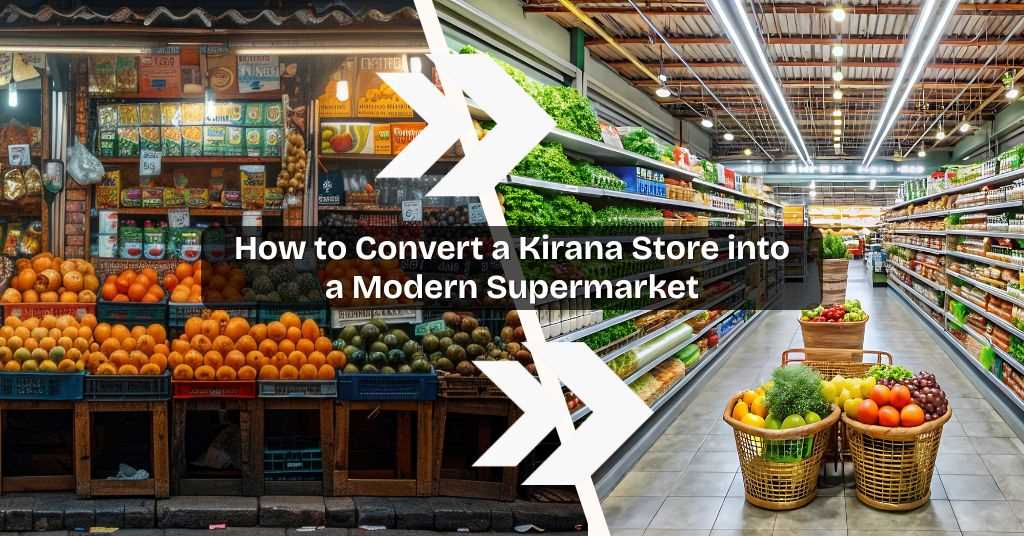
How to Convert a Kirana Store into a Modern Supermarket
When everyone in a family talks about grocery shopping, the first thing that comes to mind is the kirana store. Every family usually has one kirana store from where they buy all their grocery items, often for many years. This creates a special bond and personal relationship between the customers and the shopkeepers. However, with time, customer demands have been changing rapidly. Now, customers want more variety, clean shelves, proper pricing of products, and a modern shopping experience. These changing demands have led to the transformation of kirana stores into supermarkets. This shift has made it easier for kirana store owners, as they do not need to close their shops immediately. They can upgrade their stores step by step with proper planning. In this way, kirana store owners can successfully transform their traditional stores into modern and successful supermarkets. This blog explains how to convert a kirana store into a modern supermarket, what changes are required, what mistakes to avoid, and how the transition can improve your business growth in a practical and realistic way. Why Many Kirana Store Owners Are Upgrading to Supermarkets In today’s generation, people are very fast, and their preferences have changed over time. People now prefer stores where they can easily walk around and shop comfortably. They want a wide variety of products available in one place. Customers also like to choose products by themselves by checking ingredients, brands, and other details. They want to complete their shopping quickly and efficiently. Kirana stores follow the old counter-based model, and they are still struggling to meet these expectations. Many store owners now prefer guidance through a kirana store franchise to upgrade their business without losing existing customers. Another important reason for this change is increasing competition from shopping malls, local supermarkets, and online grocery platforms. To maintain trust and a strong relationship with customers, shopkeepers need to upgrade themselves so that they do not lose their customers. This upgrade of a supermarket allowed Kirana owners to keep their loyal customers, which not only helps in retaining old customers but also attracts new customers. Difference Between a Kirana Store and a Modern Supermarket The kirana store is generally run by a shopkeeper within a limited space. It usually follows a time-consuming manual billing system and counter-based selling. Customers ask the shopkeeper about products, and the shopkeeper hands over the items without offering many brand options. In contrast, supermarkets provide a self-service model where customers can choose products according to their needs. They can select brands freely while moving around the store. Here is a simple comparison to understand the difference clearly: Aspect Kirana Store Modern Supermarket Shopping style Counter-based Self-service Product display Limited visibility Open shelves Billing Manual or basic POS-based Product variety Limited brands Multiple brands Customer experience Relationship-based Experience + convenience Scalability Low High This shift may reduce personal interaction between customers and shopkeepers, but it improves convenience, transparency, and trust through a better and more organized system. Must Read : Supermarket vs Hypermarket: Key Differences You Need to Know Step-by-Step Process to Convert a Kirana Store into a Supermarket Converting a kirana store into a supermarket should be done in phases. Rushing into it without planning can lead to unnecessary expenses and mistakes. Step 1: Evaluate Your Existing Space First, you need to check whether your shop has enough space for a supermarket setup. There are examples of small supermarkets operating within 1,000 square feet. With proper planning, even a small area can be efficiently designed into a small supermarket. The space should be planned in a way that allows easy movement for customers. Billing counters and shelves should be arranged according to customer flow and product categories. If your space is too narrow or badly shaped, some structural adjustments may be needed. Step 2: Redesign the Store Layout A supermarket layout attracts customers, unlike kirana stores, where products are kept behind the counter, and customers cannot see many items. Products should be arranged on shelves according to categories and brands so customers do not need to move much. Shelf height and spacing should be managed properly. A clean and organized setup increases customer stay time and encourages more purchases. Step 3: Upgrade Product Range and Inventory Kirana stores mostly keep local items, while supermarkets offer a wider range of products, including national brands, regional favorites, daily essentials, and fast-moving goods. However, it is not necessary to keep every product. Understanding customer demand, local preferences, and sales data helps decide which products to stock. Many Kirana store owners make the mistake of overstocking and save extra expenses, but at this stage, instead of doing this, focus on stocking the right products in the right amount. Step 4: Introduce Billing and POS Technology One of the most important steps in converting a kirana store into a supermarket is establishing a fast billing system. Manual billing is time-consuming and can cause delays. For modern billing, setting up a POS (Point of Sale) system is essential. A POS system helps in many ways, such as: Fast and accurate billing Inventory tracking Price management Managing offers and discounts Sales reports and analysis With a POS system, the chances of billing errors are reduced, and customers can complete their billing within a few minutes, which is important for running a modern supermarket smoothly. Step 5: Improve Customer Experience Modern customers have high expectations of supermarkets. They prefer proper lighting, cleanliness, well-organized shelves, clear pricing, and fast service. Customers also expect staff assistance and guidance to easily find products. Therefore, store owners should focus on maintaining cleanliness, managing products properly, and training staff to handle customer queries politely. Prices should be clearly visible on products. All these factors attract customers, build trust, and improve customer satisfaction, which turns a Kirana store into a supermarket in a real way. Read More : Top Challenges in Running a Grocery Store Investment Planning for Kirana to Supermarket Conversion For this conversion, the first question that arises among kirana store owners is how
How to Convert a Kirana Store into a Modern Supermarket Read More »