
Should You Start a Supermarket Alone or With a Business Partner? (Pros & Cons Explained)
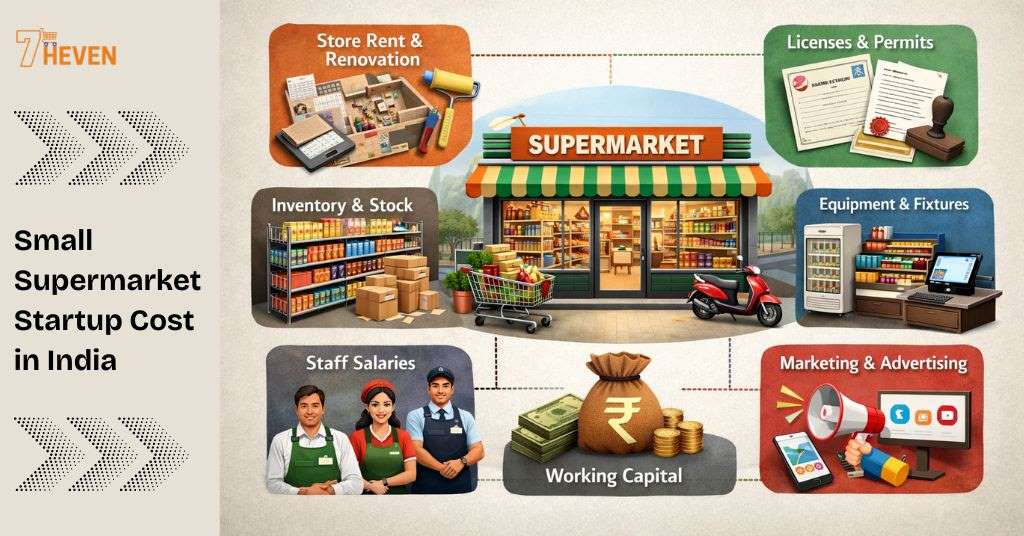
Starting a supermarket requires proper planning of the budget, store layout, goods storage, and manpower, and understanding the supermarket setup costs in India helps you plan your investment realistically. Before taking any initial step, you should assess your capability and decide whether your business needs a partner. Your choices will depend on your budget, business plan, and the experience you have, as well as your ability to manage day-to-day operations effectively. This blog explains both options in a practical way, with clear pros and cons, so you can make a smart decision. Why This Decision Matters in the Supermarket Business A supermarket business requires proper management. It is not a “set and forget” type of business. It needs daily attention, as it involves managing inventory, staff, suppliers, customer service, pricing, billing systems, cleanliness, and other services, all of which are part of the daily challenges of running a grocery store. If any one of these areas becomes weak, the overall supermarket management becomes imbalanced. This imbalance can create a bad impression on customers, which will negatively impact the business. Therefore, it is important to choose the right business model, whether sole ownership or partnership. The right model helps you decide how to handle all the different aspects of running a supermarket efficiently. Starting a Supermarket Alone: Pros and Cons Many people consider starting a business alone as the best choice because there is no need to face conflicts or losses caused by others’ mistakes. However, in this case, you have to make the entire investment yourself and handle both profits and losses alone. Pros of Starting Alone 1. Full control over decisions You have complete control over decision-making. There is no need to worry about disagreements while making important choices. You can make quick and effective decisions based on your experience. Fast decision-making helps you adapt easily to market changes and earn profits. 2. Clear ownership and profit sharing There is no need to share profits with anyone, as all earnings belong to you. You do not need to spend time discussing or explaining decisions to others, which makes business operations smoother. 3. No conflicts in vision or execution Sole ownership is preferred by many investors because the owner does not need to face conflicts. Decisions are clear, and the business runs according to a single vision. You have full control over every point of view, which helps ensure better long-term stability in management. With a proper system set up, having only one decision-maker allows faster execution of decisions, helping the business grow steadily. Cons of Starting Alone 1. Full financial burden All financial investments must be made by you alone. If any financial loss occurs, it has to be managed by a single investor. This can create pressure on the owner. 2. All responsibilities are on you All management tasks are handled by one individual. Business strategy, market demand analysis, staff management, and financial budgeting must all be managed alone, along with managing daily supermarket operations, which can be stressful. 3. Harder to manage Many people may not give proper time to the business daily, which can lead to mistakes and result in losses risk is 100% yours. If there is any loss, it will have to be handled by you alone. However, if you are experienced, then you will have the capability to handle all such circumstances effectively. Starting a Supermarket With a Business Partner: Pros and Cons When you start a business with a partner, the responsibilities are shared between both partners. This helps to enhance the business when both individuals work together using their expertise. Pros of Starting with a Partner 1. Shared Investment Reduces Pressure When two partners invest together, they share the financial pressure as well as the working pressure. One partner may look after the marketing function, while the other looks after management tasks and customer handling. 2. Workload and Responsibilities Can Be Divided When there are partners in a business, they share the workload, which helps to reduce the workload. Two individual partners can contribute their expertise—for example, one may have experience in marketing management and the other in operations or administration, including efficient inventory management.The other partner may have expertise in customer management. Both partners, with their skills, help to enhance the business. 3. Better Decision-Making When both partners have a good understanding of the business, they can identify the pros and cons of any policy they plan to implement. By discussing all aspects of a decision, they can implement the policy effectively and make proper decisions by considering both sides. 4. Improved Continuity and Backup In a partnership, when one partner is weak or unavailable, the other partner can step forward to manage the business. This helps to keep the business stable and ensures smooth working with a strong base. Cons of Working with a Partner 1. Profit Sharing Reduces Personal Earnings All profits made in the supermarket must be shared among the partners. This can reduce individual choice over the use of profits. 2. Conflicts Can Damage Trust Conflicts are commonly found in partnerships. 3. Issues Mostly Found in Partnerships Difference in expected profits Difference of opinion Conflict over working time Misunderstanding over decisions and policies Conflict over hiring more staff and management decisions 4. Slow Decision-Making in Urgent Situations In the retail business, quick decisions are often required to attract more customers. If decisions are delayed, opportunities to make profits may be lost. 5. Trust Issues if Roles Are Unclear If responsibilities are not properly divided, both partners may start questioning each other’s actions. This can create misunderstandings and reduce trust between partners. When Starting Alone Is a Better Choice Starting alone is good for you if you meet the following criteria: You are capable of handling all funds and meeting the budget requirements of the business. You have the ability to make quick decisions independently. You have the capability to handle customers and have a good understanding of market supply and demand. You are a person
Should You Start a Supermarket Alone or With a Business Partner? (Pros & Cons Explained) Read More »