
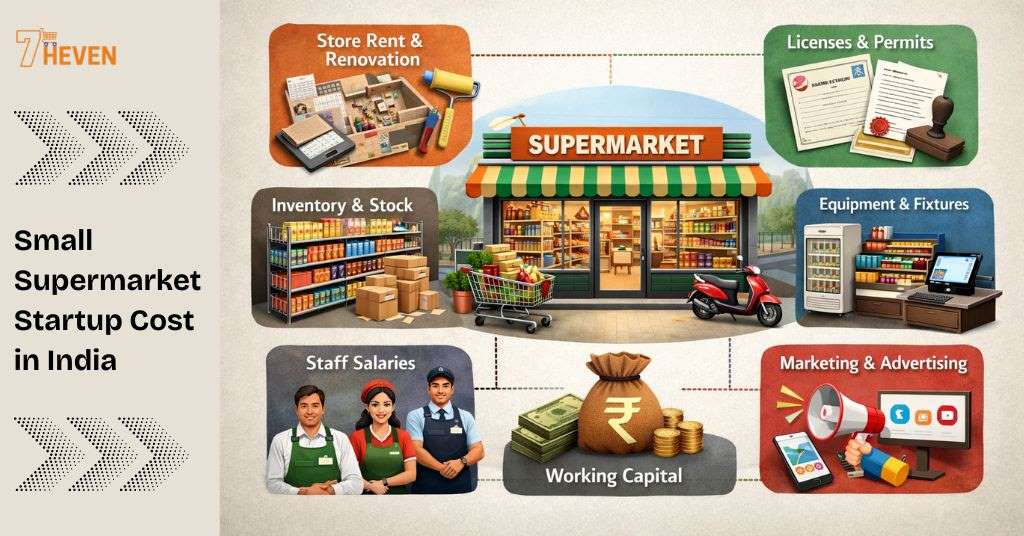
Starting a small supermarket has turned into a lucrative venture in India, especially in Tier, 2 and Tier, 3 cities. The new generation of entrepreneurial spirits no longer wants to be identified as a kirana store, but rather they want to set up a modernized supermarket with more product mix, neatly arranged shelves and a place where they would feel comfortable shopping.
However, before anything else, there is this one single and usual question:
How much would it cost to start a small supermarket in India?
The question doesn’t have a definite answer. The total investment depends on various factors, which include the size of the store, location, rent, interior setup, inventory planning and recurring operating costs. We, at the blog, simplify the costs from a jargon, free, easy, to, understand and practical perspective so that you can draw your business plan for the supermarket.
What Is Considered a Small Supermarket in India?
A kirana store is usually very small, while a small supermarket is bigger but still very small compared to large retail chains or hypermarkets in India. These are mainly stores that deliver to the immediate residential neighbourhoods, housing societies, and local neighbourhoods.
A small supermarket usually includes:
- Shopping design self-service
- Exhibited racks with various brands
- A POS-based billing system
- Foodstuffs, everyday, and consumer goods
The majority of small supermarkets’ operations are between 1500 and 2000 square feet, and this is the area where the variety of products can be offered without causing a significant increase in the cost of operations. This size is perfect for neighbourhood shopping and it is a good fit for an urban area that is developing.
Space Requirements of a Small Supermarket
How much store space you will need is the most important factor in the cost of starting up. It is not only about the size of the shop, but more of how the place is used.
A well-laid out supermarket should have areas to move, products on shelves, bill counters and a small storehouse. If the space is not enough, the customers will be packed. If it is too big, the rent and set-up costs may be increased unnecessarily.
Mostly they are buying ground-floor shops because they are more comfortable for the customers, especially when carrying heavy and monthly groceries.
Store Size Guide
Store Size | Best Use |
1200–1500 sq ft | Compact neighbourhood store |
1500–2000 sq ft | Small supermarket in ideal size |
2000+ sq ft | High-traffic or high-end areas |
They are typically preferring to use ground-floor shops because they are more convenient to the customers, particularly when carrying heavy and monthly groceries.
Read More : Mistakes to Avoid When Choosing a Location for Your Supermarket Business
Main Cost Components for Starting a Small Supermarket
The total amount of money to start a small supermarket is divided into different groups of expenses. Understanding each of them will make you plan better and not run into unplanned costs.
Shop Rent and Security Deposit
Rent mainly depends on the city, area and traffic of customers. The rents of the shops that are close to residential societies or on busy roads are usually high as well as have more customers.
Usually, landlords will also ask for a security deposit, which they will return, besides the monthly rent. The rent cost should be one of the factors in the decision-making process, and thus choosing a very low rental place may save you money, but the business may be negatively affected, so you should weigh the rent against the business potential.
Interior Furnishing, Shelving, and Store Planning
Such a price will be enough to cover racks, shelves, billing counters, lighting, simple flooring and minimal branding. A small supermarket does not need luxurious furnishing; it is enough just to make it clean, organized and well-lit.
New store owners, in majority, spend too much money on interiors that will not increase their sales. Small supermarkets should be provided with simple and practical layouts.
Initial Inventory and Stock Cost
The biggest cost of setting up a supermarket is usually the inventory. It includes groceries, packaged food, daily necessities, personal care, and household products.
An intelligent inventory strategy is about:
- Fast-moving goods that are used every day
- Locally popular brands
- A moderate mix of low and high-margin products
The common mistake at a typical launch is overstocking. It ties up capital and increases product expiration risk. Stock levels should be aligned with demand at the local level.
Must Read: Choosing the Right Model for Your Supermarket Business
Billing System and POS Software
Efficient billing and POS systems are a must in modern supermarkets. Paper-based billing is time-consuming at checkout and stock management becomes difficult.
A POS system supports with:
- Faster billing
- Inventory tracking
- Sales analysis
- Deal and offer management
The price of POS systems may be quite low, but they are very important in everyday operations.
Licenses and Legal Requirements
Several basic licenses are required by a supermarket to operate legally. These include:
- Food products registration by FSSAI
- GST registration
- Shop and Establishment license
The expenses involved are usually very small, and non-compliance with legal procedures may cause a big problem later.
Staff and Monthly Operating Expenses
These recurring expenditures should be planned ahead so that money will be saved during the first months.
Estimated Total Cost to Start a Small Supermarket
Since costs vary from city to city, it is better to think in terms of cost share instead of exact numbers.
Category of Cost | Approximate Share |
Inventory | High |
Store design and interior design | Medium |
Rent & deposit | Medium |
Technology & billing | Low |
Licenses & misc | Low |
Initial buffer | Of great essentiality |
Overall, starting a small supermarket requires careful planning rather than heavy spending. Smart decisions can help you control cost without compromising quality. With the right understanding of expenses, layout, and inventory, entering the supermarket business becomes a structured and achievable opportunity for new entrepreneurs.
Typical Mistakes That Raise the Startup Cost
Most of the newly first-time supermarket owners plan badly and as a consequence, they overspend. First-time owners make many mistakes, including:
- Choosing the wrong location
- Spending heavily on interiors
- Too much stock at the initial launch point
- Not paying attention to monthly expenses
- Poor planning for the store layout
It is possible to save a lot in the long run by avoiding these mistakes.
Independent Setup vs Franchise Support
If it is an independent ownership with a single owner, he or she is responsible for all operations that include suppliers, pricing, layout, billing, and marketing. Usually, this is a process of trial and error.
A franchising system comes with planned steps, systems, and experience, which helps to avoid mistakes and unnecessary costs. Most of the time, franchise assistance gives first-time entrepreneurs an easier way of cost planning and operation.
7Heven is a platform that provides step-wise assistance to supermarket owners to get set up. Instead of store owners guessing, they get clarity through 7Heven on store size, inventory planning and layout requirements.
Conclusion
Small stores of 300–500 sq ft can be started profitably in most areas of India with the right planning and approach. Costs will always vary, but a good decision-making process will help you avoid unnecessary spending.
By knowing the costs, planning the stock well, and choosing the right way to set up the store, you can build a strong foundation for long-term success. With proper mentoring and clear planning, a small supermarket can turn into a stable and rewarding business venture.
FAQs
- How much investment is needed to start a small supermarket in India?
The amount of investment depends on factors such as the size of the store, location, inventory, and setup. It is generally a combination of interiors, stock, and initial operating expenses. - What is the ideal size of a small supermarket?
The majority of small supermarkets function efficiently in an area of 1500–2000 sq ft, which allows enough space for product display and customer movement. - Is it worth starting a small supermarket in India?
The profitability of a supermarket depends on the location, pricing strategy, and inventory management. If planning is done properly, supermarkets can generate steady income. - Can I convert my kirana store into a small supermarket?
Yes, many kirana store owners gradually upgrade their stores by improving layout, inventory range, and billing systems. - Is franchise support helpful for starting a supermarket?
Yes, franchise support is very useful for first-time store owners. It helps with cost planning, inventory selection, and overall operations.