
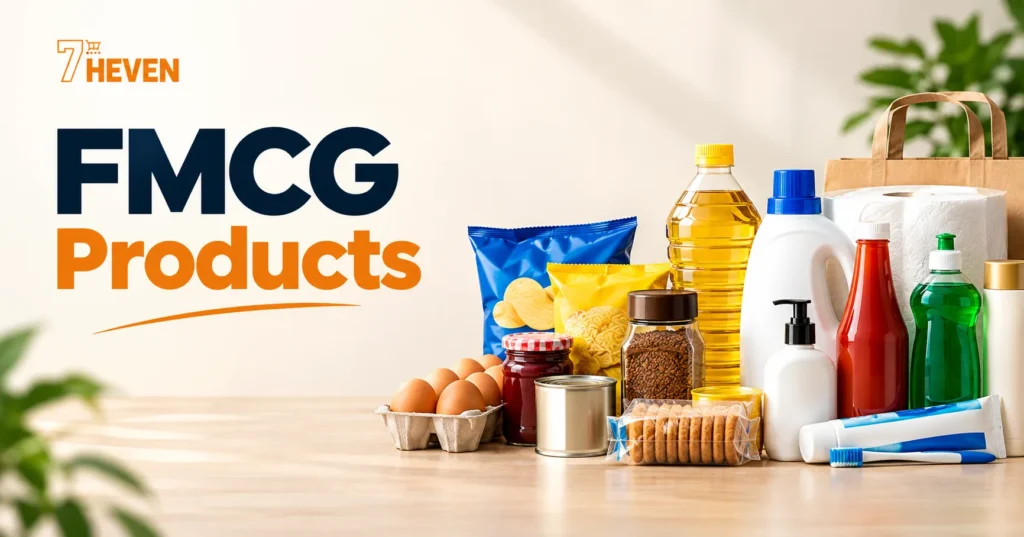
Think about the last time you went to the supermarket. Maybe it was a packet of biscuits, toothpaste , shampoo detergent or a few snacks for the evening. You probably did not think much about these purchases because they are simply part of your regular shopping. These products are broadly known as FMCG products or fast moving consumer goods.
The name sounds technical but the idea is quite simple. FMCG products are goods that people buy regularly, use or consume in a relatively short time, and replace again when they run out. Food and beverages are obvious examples but FMCG goes way beyond that. Soap, shampoos, toothpaste, household cleaners and other everyday items also fall into this category.
What are FMCG products?
FMCG products are everyday consumer goods that move quickly from retailers to consumers because they are purchased frequently. For example toothpaste. You buy a tube, use it everyday and eventually need another one. The same goes for milk biscuits, detergents and other household products. That regular buying pattern is what makes FMCG different from other products.
FMCG stands for fast moving consumer goods. The phrase fast moving refers to how quickly these products are generally sold and replaced. Most products share a few common characteristics like they are consumed or used quickly, demand is usually high and individual products are often available at relatively affordable prices. Of course not every product behaves exactly the same. A premium skin care product for example might cost much more than a packet of biscuits and might be brought less frequently. But it can still fall under the FMCG sector because it is a consumer product sold through a retail channel and as a regular replacement cycle.
Main characteristics of FMCG products
One of the easiest ways to understand FMCG is to think about your own shopping basket. You probably do not buy a refrigerator every month or week. But you could buy snacks, groceries , personal care products and cleaning supplies several times a month. That regular demand means retailers have to keep a close eye on their stock. If a customer walks into a store looking for a popular biscuit brand and finds an empty shelf they might simply buy another brand. If the same thing happens repeatedly you can do sales.
FMCG products list by category
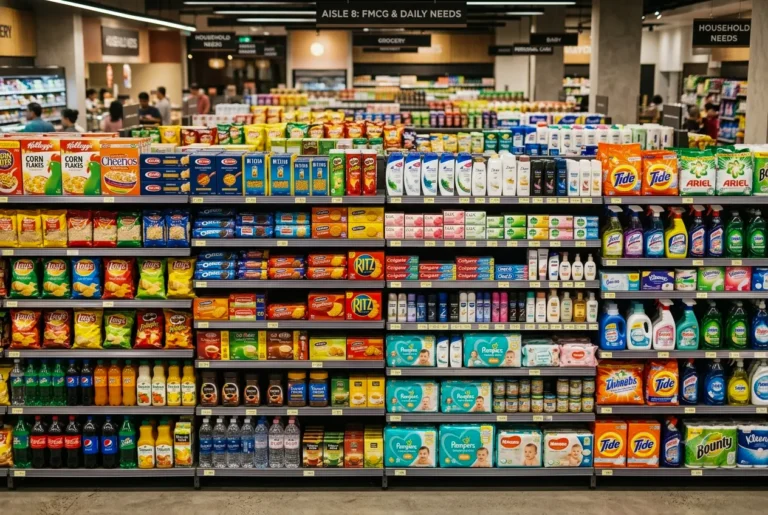
There is no single FMCG product list that every supermarket follows. Different retailers might arrange their products differently depending on their customers and Store format
FMCG Category | Examples |
Food Products | Biscuits, snacks, noodles, pasta, rice, atta, spices, pulses, chocolates, confectionery |
Beverages | Tea, coffee, juices, soft drinks, packaged drinks, health beverages |
Dairy & Chilled Products | Milk, curd, butter, cheese, paneer, flavoured dairy products |
Personal Care | Soap, shampoo, toothpaste, face wash, deodorant, body wash, skincare |
Household Care | Detergent, dishwashing liquid, floor cleaner, toilet cleaner, surface cleaner |
Health & Wellness | Hygiene products, selected nutrition and wellness products |
Baby Care | Diapers, baby wipes, baby food, baby toiletries and skincare products |
Food Products
Food is one of the largest in the FMCG sector.
Common examples include:
- Biscuits
- Namkeen and packaged snacks
- Noodles and pasta
- Atta and other staples
- Rice and pulses
- Spices
- Chocolates
- Confectionery
- Ready-to-eat foods
- Packaged breakfast products
Some of these products might be brought every week while others might stay in the pantry for a few months. The buying frequency can vary but they all form part of everyday retail.
Beverages
Beverages are another FMCG category. This includes tea, coffee , soft drinks, packaged drinks and other ready to drink products. Demand can also vary by season. For example cold beverages might see stronger demand during warmer months while tea and coffee are regular household purchases for many customers.
Dairy and chilled products
Milk, curd butter cheese and other similar products come under dairy and chilled categories. These products need a little more attention because storage conditions and expiry dates matter. You cannot read a packet of biscuits and a carton of milk in exactly the same way. The shelf life storage requirements and replacement cycle are very different.
Personal Care Products
Personal care covers products people use as part of their regular grooming and hygiene routines.
Examples include:
- Soap
- Shampoo
- Toothpaste
- Toothbrushes
- Face wash
- Body wash
- Deodorants
- Skincare products
- Handwash
Household Care Products
Household FMCG items help consumers clean and maintain their homes.
Examples include:
- Laundry detergent
- Dishwashing liquid
- Floor cleaner
- Toilet cleaner
- Surface cleaner
- Kitchen cleaner
- Air fresheners
Health and Wellness products
Depending on how the retailer defines the categories health and Wellness may include everyday products and selected nutritional Wellness products also. You need to pay attention to product information storage requirements and applicable rules when handling products in this category.
Baby Care Products
Baby care includes products such as:
- Diapers
- Baby wipes
- Baby toiletries
- Baby food
- Baby skincare products
Availability matters here because many of these products are repeat purchases.
Types of FMCG Products
FMCG products can also be grouped by how they are stored, packaged and positioned in the market.
Health and Wellness products
These products relatively have a short shelf life or need specific storage conditions. Milk, certain chilled products and some ready to eat items are common examples. For these products you need to keep a close eye on expiry dates and stock rotation. There is a little point in ordering more stock simply because sales are high if the existing stock is already approaching its expiry date.
Non-Perishable FMCG Products
These products generally have a longer shelf life when stored correctly.
Examples include:
- Packaged biscuits
- Rice
- Pulses
- Spices
- Detergents
- Soaps
- Packaged snacks
Packaged FMCG products
Most modern FMCG products are sold in some form of packaging. Packaging makes products easier to transport and display. It also gives your customers important information like quantity ingredients and usage instructions. Packaging also makes it easy to identify and organize products on shelves.
Premium versus mass market FMCG products
Not everyone buys the same product at the same price. One customer might want an affordable everyday shampoo while another might specifically look for a premium shampoo with specific ingredients or benefits. Mass market products are generally aimed at a broader customer base and focus on affordability and wide availability. Premium products might offer specialized features and ingredients.
Fmcg products versus grocery products
You might have noticed that some people use FMCG and grocery as if they mean the same thing. They are related but not identical. Grocery products are basically food and household staples sold through grocery details. FMCG products are a broader category of fast moving consumer goods and can include personal care, household care, baby care and other everyday products. For example biscuits, rice and packaged foods can be both general and FMCG products. Soap shampoo are, however, considered FMCG products even though you would not necessarily think of them like grocery items. Fresh vegetables and fruits are another example. They are everyday grocery purchases, but they are not always classified as FMCG in the same way as packaged consumer goods.
Where are FMCG products sold?
Supermarkets: Supermarkets combine many FMCG categories under one roof. You can pick up grocery snacks, beverages and cleaning products during one shopping trip.
Grocery stores: Local grocery stores remain an important part of everyday shopping especially for products people need regularly and do not want to travel far to buy.
Kirana stores: Kirana stores have been an important part of India’s retail system. The biggest advantage is often simple: they are close to where people live and customers might already have a similar relationship with the shopkeeper.
Convenience stores: The stores focus on quick purchases. Snacks, beverages and personal care products are common examples.
Ecommerce: Online shopping has made it possible to order FMCG products without visiting a physical store. You can compare products, check prices and also order everything from groceries to personal care items from your phone.
Quick commerce: Quick commerce has added another layer to FMCG shopping. You can order products like milk snacks, beverages , toiletries and household essentials through apps and easily receive them quickly depending on the service available in your location.
FMCG products in india
India’s FMCG market is really broad. A typical supermarket can carry everything from basic staples and biscuits to personal care products and cleaning supplies. Customers’ preferences are also changing. You can see people looking for healthier food choices, convenient ready to eat products and premium personal care. At the same time affordability remains important for a large section of consumers. The range offered by Indian FMCG companies shows how broad the sector has become.
For example ITC’s FMCG portfolio includes packaged products personal care, education, safety machines, and stationery alongside its cigarette business. Shopping habits are also changing. Modern retail, e-commerce and quick commerce have given your customers more ways to buy everyday products. For supermarkets, this means having the right products on the shelf is only part of the job. They also need to understand what customers are buying and how fast each product is moving.
How supermarkets manage FMCG products?
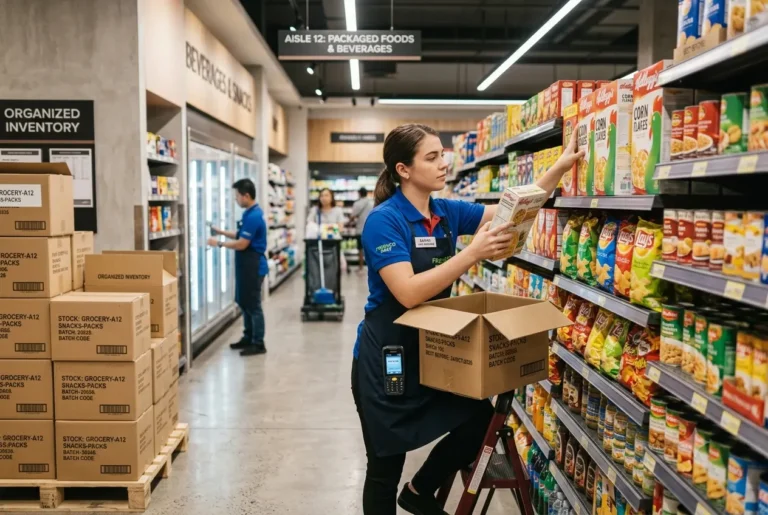
A supermarket might look simple from a customer’s perspective. You walk in and pick up what you need and pay at the counter. Behind the scenes, there is a lot happening. If you are a retailer, you need to decide what to stock, how much water and where to display it, and when to reorder it.
Product sourcing: It all starts with choosing the right products. You need to understand what your customers actually want. A product that sells extremely well in one neighborhood might move much more slowly somewhere else. Retailers also have to consider supplier reliability and pricing besides product availability.
Inventory and stock replenishment: Once products are in the store the next question is simple: how much stock should you keep? Keep too little in the products that go out of stock. Keep too much and money gets tied up in inventory. For products with a short shelf life excess stock can also create wastage. This is the only reason why supermarkets need to track sales and replenish products based on actual demand
Expiry management: Expiry management is especially important for food dairy and baby products. You also need to know which products are approaching expiry and make sure older stock is moved appropriately before newer stock.
Product placement: Where you place a product also matters. Walk through the supermarket and you will notice that products are rarely arranged randomly. Similar products are grouped together . Popular categories are easy to find and promotional products might receive additional display space.
How 7Heaven Supports supermarkets with FMCG products?
Running a supermarket involves way more than just bringing products into a store and putting them on shelves. You need a sensible product mix and reliable sourcing. It is especially important for a supermarket franchise. A franchise partner might have the store space and investment ready but still need support with the practical side of running the business. This is exactly where the 7Heven Supermarket franchise model can be relevant. The idea is to bring together the different parts of supermarket operations like product sourcing and merchandising and day-to-day store management.
Ask practical questions:
- How are products sourced?
- How is inventory managed?
- How often is stock replenished?
- What support does the franchisee receive?
- How is the product range decided?
- How are supermarket operations handled?
- What happens when certain products are not moving?
These details have a direct effect on how smoothly a supermarket operates.
Conclusion
So you need to know that FMCG products are the everyday goods that people buy, use and replace regularly. This includes much more than packaged food. From biscuits and beverages to soap and shampoo FMCG touches almost every part of everyday shopping. The main FMCG product categories include food beverages, dairy personal care, household care health and Wellness. The products are basically sold through supermarkets kirana stores and quick commerce services. For supermarkets the challenge is not simply having a large FMCG product list. It’s all about having the right products available at the right time. This is also why product sourcing inventory management and store operations matter so much in supermarket business