
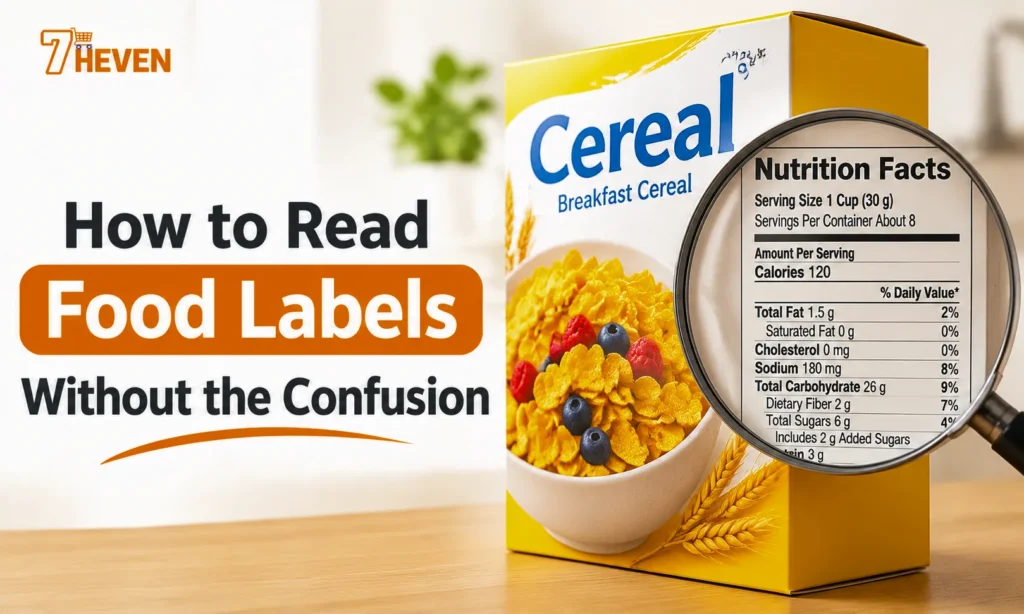
Have you ever picked up a packet of biscuits, breakfast cereal, or fruit juice and wondered whether it is actually a good choice? The front of the pack might say ‘high in fibre’ or ‘low in fat’, but that does not always tell everything about the product.
Most of you might just check the price, brand and expiry date before buying packaged food. But the small details printed on the pack can tell you much more about what you are eating. Learning to read food labels helps you compare products and understand the ingredients. You don’t need to be a nutrition expert to understand them.
What is a food label and why does it matter?
A food label provides important information about a packaged product, including the ingredients, nutritional value, quantity, or storage requirements. Think of it like a quick introduction to what is inside the packet. 2 products might look almost identical on a supermarket shelf, but the ingredients and nutritional content can be quite different. For example, 2 breakfast cereals might be advertised as healthy.
But one might contain more added sugar, while the other offers more fibre and protein. By understanding food labels, you can compare these differences before making a purchase. Food labels also help you if you need to avoid certain ingredients because of allergies or diet preferences. They provide useful information about how to store food safely and when it should be consumed.
How to read the ingredient list?
The ingredient list is one of the first things worth checking when buying packaged food. It tells you what has been used to make the product and gives you a better idea of the composition.
Understand the order of ingredients.
Ingredients are generally listed in descending order of the weight at the time of manufacture. This means the ingredient appearing first is present in the largest quantity. For example, if a biscuit packet lists refined wheat flour, sugar, vegetable and cocoa powder in that order, refined flour makes up the largest proportion among all the ingredients. It is useful when buying products advertised as whole grain or fruit waste or high in protein.
Look for added sugar, salt, and additives
Sugar might appear under different names, like glucose syrup, fructose, and maltose. Reading the complete ingredient list on the food products can help you identify these sources. Similarly, check for added salt, colours, and flavouring substances. Not every food additive is harmful. Many approved additives serve specific purposes like maintaining freshness or improving food stability.
Pay attention to the serving size
One common mistake is that nutritional information applies to the entire packet. For example a snack packet contains 200 calories per serving but the packet has 2 servings. Eating the entire packet would provide 400 calories. Also check whether the information is given per serving or per 100 grams. Comparing products using the same quantity makes it easier to understand the nutritional differences.
Check sugar, salt and fat content
Sugar, salt and fat deserve attention because their amounts can vary significantly between similar packaged foods. A breakfast cereal that looks healthy might contain considerable added sugar. Similarly, a packet of savoury snacks might contain more sodium than expected. When checking sugar content in packaged foods, look at both total sugar and added sugar where declared. Total sugar includes naturally occurring sugars, while added sugar refers to the sugar added during processing.
For salt, you can check the sodium value. Salt and sodium are related, but they are not identical. Approximately one gram of sodium is equivalent to 2.5 grams of salt. Fat information is equally important. You need to look at the total fat and saturated fat separately, as a product can contain different types of fat. Instead of judging a product just by one number, compare similar fruits and consider how frequently you eat them.
Understand food dates and storage instructions
Have you ever found an unopened packet in your kitchen and wondered if it is still edible? Checking the date marking and storage instructions can help you decide.
Best before date versus expiry date
A best-before date mainly indicates the time during which food is expected to maintain its intended quality when stored correctly. After this date, taste or freshness might change. The expiry date or use-by date indicates the end of the stated period for consuming the product. Do not consume food after its expiry or use-by date. Always check the specific wording printed on the package and follow applicable food safety guidance.
Follow storage instructions
Some packaged foods can be stored at room temperature until opened but require refrigeration afterward. For example, certain sauces or spreads might have instructions like refrigerate after opening or consume within 3 days of opening.
Check allergens and Food safety information
Food allergies can cause serious reactions, so allergen information is important when shopping for someone with an unknown allergy. Common allergens include milk, peanuts, tree nuts, soy, and wheat, besides eggs and fish. Check the food allergen information on the packaging and read the ingredient list carefully. Some products might also include precautionary statements like “may contain peanuts’ or ‘manufactured in a facility that processes nuts.
These statements will indicate a possible risk of cross-contamination during Manufacturing. If someone in your family has a food allergy, do not rely only on the product name or appearance. You need to read the label every time, even when buying a familiar product.
Understand food labels in India
If you buy packaged groceries in India, you will notice several declarations required under food labeling regulations. Understanding food labels in India helps you recognize important information and make informed purchases.
Check FSSAI Details
Packaged products covered by applicable regulations generally display the license number. This number identifies the licensed or registered food business operator, as applicable. But having a number does not automatically mean a product is healthier or nutritionally superior.
Identify vegetarian and non-vegetarian symbols
In India, packaged foods use specific symbols to help consumers identify their food preference. A green circle inside a square indicates vegetarian food. The brown triangle inside the square indicates non-vegetarian food. These symbols are especially useful when purchasing biscuits, sauces, snacks, or instant foods and other products where ingredients might not be obvious.
Look for Other Important Declarations
Depending on the product and applicable requirements, FSSAI food labelling requirements cover information such as:
- Name and description of the food
- Ingredients and nutritional information
- Net quantity
- Manufacturer or marketer details
- Batch or lot identification
- Date marking and storage instructions
- Allergen declarations
Common mistakes to avoid when reading food labels
Even people who regularly check labels can ignore important details.
Bursting front-of-pack claims: Words like natural multigrain or low fat might sound appealing but they do not always tell you the complete nutritional story.
Ignoring serving sizes: A packet might contain multiple servings. If you eat the entire pack, your calorie and nutrient intake might be higher than the values listed for one serving.
Looking only at calories: Calories are useful but they are not always the only measure of nutritional value. Protein fibre sugar sodium and fat content also matter.
Assuming expensive products are healthier: A premium price or attractive packaging does not guarantee better ingredients. Compare the actual label information.
Forgetting to check storage instructions: Food can spoil before its expiry date if it is not stored properly. Always follow the instructions especially after opening the package.
Conclusion
Reading food labels does not have to take a lot of time. Once you know what to look for, a quick check for ingredients, nutritional information, and date markings can tell you a lot about a packaged product. The next time you are shopping, compare similar products instead of choosing one based only on its branding or packaging.
Notice the sugar content, check the sodium levels, and see which ingredients to understand. Reading food labels is a useful habit that can help you make informed choices for yourself and your family. You do not need to avoid every packaged food. You just need to know what you are buying and how it fits into your everyday meals.