

A supermarket can have hundreds of products on its shelves and still disappoint customers. Here, the problem isn’t always the size of the store. But, it’s the absence of products people actually came to buy. A customer looking for cooking oil, detergent, or even a particular brand of tea should not have to visit another shop for something they purchase regularly.
A well-planned supermarket product list starts with this simple retail reality. The objective is not to fill every shelf but to create an assortment that reflects households’ needs, purchasing habits, and local demand.
For a new grocery store, that means balancing every food item with personal care, cleaning supplies, kitchen essentials, and other frequently purchased products.
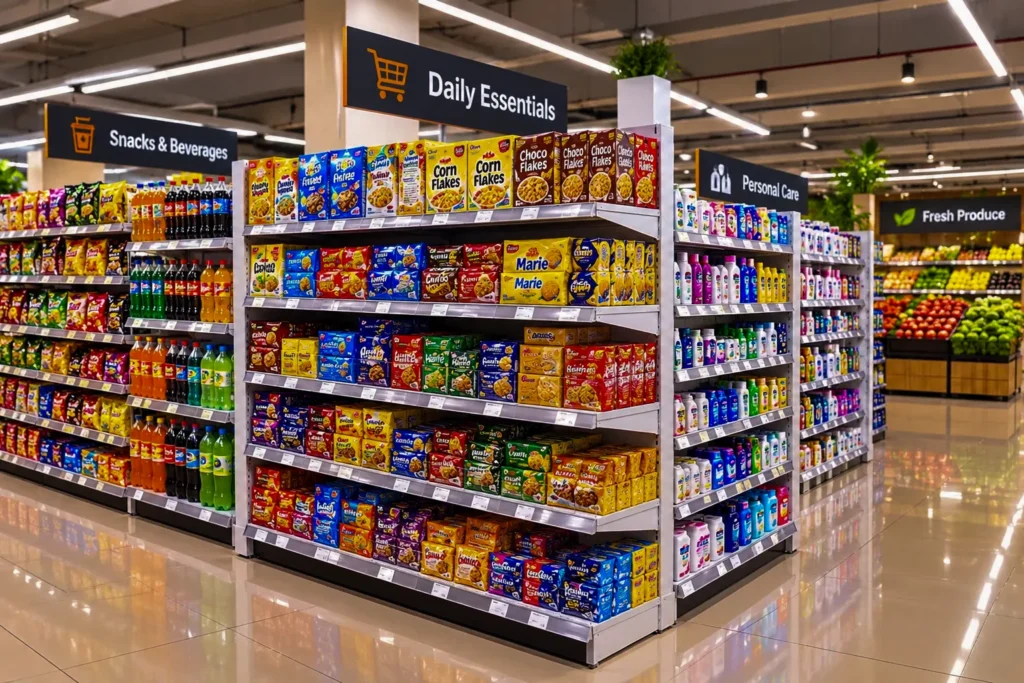
What Products Should You Stock in a New Supermarket?
A new supermarket should stock products across 9 major categories: stable foods, packed groceries, specific, dairy, beverages, personal care, household cleaning, home utilities, as well as baby care. Together, these categories cover the routine purchasing needs of most households.
Here is a practical grocery products list to help plan your initial assortment.
1. Staple Food Products Every Grocery Store Needs
Staple foods are the most important items in a typical grocery basket. Customers expect these products to be available to them because they are buying them over and over.
- Rice: Basmati, sona masoori, brown rice and regular rice.
- Flour: Whole wheat atta, multigrain flour, maida and besan.
- Pulses: Toor dal, moong dal, masoor dal, urad dal and chana.
- Sweets: Sugar, Jaggery and alternative sweeteners.
- Cooking oils: Mustard oil, Sunflower oil, groundnut oil, refined oil and Ghee.
2. Packaged Food and Ready-to-Eat Products
Packaged products attract customers with the ease of use, quick meals, and snacks.
- Biscuits, cookies and crackers.
- Staples such as instant noodles and pasta.
- Breakfast cereals and oats.
- Snacks like namkeen, chips and packaged snacks.
- Ready-to-eat foods and instant food mixes.
- Sauces, mayonnaise and jams, and spreads.
3. Spices, Masalas and Cooking Ingredients
Cooking ingredients deserve their own category because household preferences vary considerably.
- Whole spices: Cumin, coriander seeds, cardamom, cloves and pepper.
- Ground spices: Turmeric, chilli powder and coriander powder.
- Blended masalas: Garam masala, chole masala, pav bhaji masala and biryani masala.
- Seasonings, herbs and cooking pastes.
- Pickles, chutneys and traditional condiments.
4. Dairy and Refrigerated Products
Dairy products encourage frequent store visits, particularly in residential neighbourhoods.
- Milk and flavoured milk.
- Curd and yoghurt.
- Butter and cheese.
- Paneer and cream.
- Frozen vegetables, frozen snacks and other frozen foods.
Maintain proper refrigeration and monitor expiry dates. Spoilage in this category can quickly turn regular sales into avoidable losses.
5. Beverages and Drink Products
The beverage section should cover everyday consumption as well as convenience purchases.
- Tea leaves, tea bags and coffee.
- Packaged fruit juices.
- Carbonated soft drinks.
- Bottled drinking water.
- Health drinks, energy drinks and flavoured beverages.
6. Personal Care and Hygiene Products
Personal care products make a supermarket more useful for customers who prefer purchasing household necessities in one place.
- Bathing soaps and body washes.
- Shampoos and conditioners.
- Toothpaste, toothbrushes and mouthwash.
- Face washes, moisturisers and skincare products.
- Sanitary pads and other hygiene essentials.
7. Household Cleaning and Laundry Products
Cleaning products are routine purchases of the home and do not fall under the luxury category.
- Liquid detergents and washing powders.
- Dish-washing bars and liquids.
- Individuals employed in cleaning up the floor and toilets.
- Cleaners and disinfectants.
- Fabric conditioners.
- Mops, scrubbers, cleaning brushes and sponges.
8. Home, Kitchen and Daily Utility Products
One of the most beneficial general store product lists includes consumables. Simple products are also required for customers for their daily activities.
- Kitchen storage containers.
- Cooking utensils and plain kitchen equipment.
- Garbage bags.
- Food wrapping materials and aluminium foil.
- Kitchen tissues and paper towels.
- Basic stationery and household items, including batteries.
9. Baby Care and Other Essential Products
Baby care products serve a specific but recurring customer requirement.
- Baby diapers in different sizes.
- Baby wipes.
- Baby soaps, shampoos and lotions.
- Baby feeding bottles and feeding accessories.
- Other basic personal hygiene products.
Which Products Should a New Supermarket Stock First?

A complete range of products and a good start-up inventory are not the same. To satisfy any retailer’s needs, he or she might end up buying hundreds of variations, but buying all at once can use up working capital before any customer has been bought.
First, the products are those that have predictable buying behavior, storage needs, and a reliable supplier.
Priority | Product examples | Stocking approach |
Essential | Rice, flour, oil, salt | Prioritise from opening day |
Regular demand | Biscuits, tea, soap, detergent | Maintain consistent availability |
Category expansion | Kitchen accessories, speciality foods | Introduce after observing demand |
Seasonal | Festival sweets, gift packs, seasonal products | Purchase according to expected demand |
A few practical stocking decisions deserve attention:
- Protect essential availability: Running out of everyday products repeatedly can damage customer confidence. Maintain sufficient stock of frequently purchased essentials.
- Avoid excessive product variations: Start with popular sizes, familiar brands and commonly purchased varieties. Expand the range when sales justify it.
- Keep replenishment practical: Products with dependable suppliers and shorter restocking cycles are easier to manage.
- Test unfamiliar products: Introduce speciality foods and niche products in smaller quantities before committing more purchasing money.
How Does the Supermarket Product List Change According to Store Location?
A product that sells quickly in one neighbourhood may remain untouched in another. The surrounding customer base should influence the assortment more than assumptions about what a supermarket is supposed to carry.
Products for Supermarkets in Residential Areas
Residential stores should prioritise rice, flour, milk, pulses, cooking oil, biscuits, detergents, personal care products and household cleaning supplies. Families often value convenience and consistent availability more than an unusually large speciality range.
Products in Busy Commercial Areas
Office workers, commuters and visitors often make shorter purchasing trips. Packaged snacks, bottled water, soft drinks, instant foods, ready-to-eat products and smaller product packs deserve greater shelf visibility.
Products for Supermarkets in Small Towns
Affordable everyday products, familiar brands and regionally preferred food items should receive priority. Regional spices, local snacks and commonly used household products can outperform expensive speciality alternatives.
Products in Premium Residential Areas
Customers may show stronger interest in organic foods, imported products, speciality ingredients, premium personal care brands and healthier snack alternatives. However, premium pricing alone does not guarantee demand. Product selection should still reflect actual purchasing behaviour.
How Does the Supermarket Product List Change According to Store Location?
Product selection becomes easier when every proposed addition is evaluated against commercial and operational realities.
- Study local purchasing habits. Observe nearby grocery shops, residential communities and competing supermarkets. Identify what customers purchase regularly, which brands they prefer and which products are missing from the area.
- Evaluate sales frequency. A moderately profitable product that sells consistently may be a better inventory decision than an expensive item that occupies shelf space for months.
- Calculate the actual margin. Consider purchase price, selling price, discounts, handling expenses and possible wastage. Gross margin means little if the product remains unsold.
- Check shelf life and storage. Refrigerated goods, frozen foods and short-dated packaged products require more careful purchasing than long-lasting staples.
- Assess supplier reliability. A product is only commercially useful if it can be replenished at the right time and at a workable purchase cost.
The Five-Question Product Selection Test
Before adding an item to your grocery shop products list, ask:
- Do local customers genuinely need it?
- How frequently are they likely to purchase it?
- Can I source it reliably?
- Can I store it under suitable conditions?
- Does its expected sales potential justify the investment?
If a product fails several of these tests, reconsider its opening-day priority.
How Much Inventory Should You Purchase When Opening a Grocery Store?
There is no standard opening inventory budget. There are differences in the size of the shelves, the numbers of shoppers, the variety of products needed on offer and purchasing power between a shop in a compact neighbourhood and a large supermarket.
What works better is to spread the purchase budget among different product categories, so that the business does not end up buying products from a supplier that has the best bulk price.
Make these choices first:
- Spend money by category: Leave enough buying power for basic foods, packaged foods, personal care and household cleansers.
- Buy by shelves: Do not overstock shelves to capacity.
- Manage short-dated inventory: Reduce short-dated stock to only be bought what can be sold realistically.
- Have funding on hand before opening: If popular items have to be replaced or restocked, there is not a lot of money available if it is all used up before opening.
- Look at what has actually being sold: Inform the first couple of sales weeks on what items are selling quickly but not fast enough, what items are selling slowly or not at all, and what items are in demand that are not being sold.
The goal is to keep products available and not be forced to use floating funds to pay operational expenses due to unsold products at the back of the ship.
What Are the Common Inventory Mistakes New Supermarket Owners Should Avoid?
Several purchasing mistakes can weaken a supermarket before it establishes a regular customer base.
- Buying without demand research: Attractive packaging or supplier discounts do not prove that local customers will purchase a product.
- Overstocking during opening: Large quantities of unfamiliar products increase storage pressure and expiry risk.
- Ignoring regional preferences: A generic supermarket items list may overlook local cooking ingredients, familiar brands and traditional food preferences.
- Neglecting expiry tracking: Products should be organised using the First In, First Out (FIFO) method, with earlier-expiring stock prioritised for sale.
- Depending on one supplier: Supplier disruptions can leave essential shelves empty. Maintain alternative sourcing options.
- Ignoring non-food categories: Household cleaning, hygiene and kitchen products contribute to a more complete shopping experience.
- Failing to track stock movement: Without accurate inventory records, owners may continue purchasing products that customers rarely buy.
Final Thoughts
A supermarket earns customer confidence through small, repeated experiences. The product is there, the brand you know is on the shelves and there is no need to make a trip to somewhere else to get an everyday need that is required in the home. This consistency is the result of being responsive to local demand, not just increasing the range of products.
This is made easier to organise with a structured retail model. 7Heven provides the supermarket franchise concept in an integrated format that features a wide product mix and retail stores. The retailing concept that retailers can learn from it will be useful to aspiring retailers to understand the relationship amongst product variety, customer convenience and organised supermarket management.