
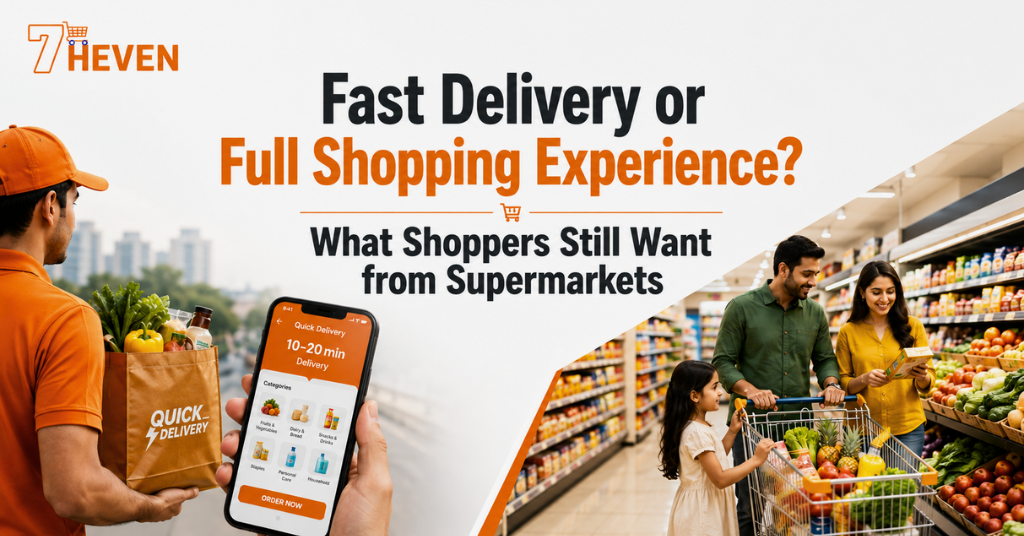
The grocery retail industry in India is changing rapidly. With the rise of quick commerce platforms offering deliveries in minutes, many people wonder whether supermarkets will eventually become irrelevant.
Quick commerce has undoubtedly changed how consumers purchase daily essentials. The convenience of ordering groceries through a mobile app and receiving them within a short time appeals to busy households and working professionals.
However, despite this growing trend, supermarkets continue to attract millions of customers every day. From fresh produce and monthly grocery shopping to personalized service and community trust, there are many things that quick commerce platforms cannot fully replace.
In this article, we explore the difference between quick commerce and supermarkets and why organized grocery retail continues to play a vital role in India.
What Is Driving the Growth of Quick Commerce?
Quick commerce focuses on delivering products quickly, often within 10 to 30 minutes. Platforms like Blinkit, Zepto, and Instamart have become popular in urban areas where consumers value convenience and speed.
Quick commerce is especially useful for:
- Emergency grocery needs
- Last-minute purchases
- Busy working professionals
- Small daily orders
- Convenience-driven shopping
While this model serves an important purpose, it addresses only one part of the grocery.
Also Read:: Why Superstore Franchises are the Future of Grocery Retail in India
Why Customers Still Trust Local Grocery Stores
Personal Relationships Build Long-Term Loyalty
One of the biggest advantages of physical stores is the relationship they build with customers.
Store owners and staff often know their regular customers personally. They understand their buying habits, preferred brands, and specific requirements. This familiarity creates a level of comfort that online platforms struggle to provide.
Personal recommendations and friendly service help strengthen customer loyalty over time.
Local Stores Understand Community Needs
Every locality has different preferences and buying patterns.
Physical stores can adjust their inventory based on local demand, seasonal trends, and customer feedback. This flexibility allows supermarkets to serve their communities more effectively than a centralized delivery model.
The Shopping Experience Apps Cannot Offer
The Joy of Browsing Products in Person
Many customers enjoy exploring products before making a purchase.
Walking through supermarket aisles allows shoppers to compare brands, check packaging, discover new products, and make informed decisions.
This experience often leads to better purchasing choices.
Family Shopping Remains a Routine Activity
For many households, grocery shopping is more than a transaction.
Families often visit supermarkets together during weekends or monthly shopping trips. It becomes an activity where they plan purchases, compare options, and spend time together.
This aspect of shopping cannot be replicated through a mobile application.
In-Store Promotions Create Better Engagement
Physical stores provide opportunities for customers to discover products through displays, sampling activities, promotional offers, and seasonal campaigns.
These interactions encourage product exploration and increase customer engagement.
Why Fresh Fruits and Vegetables Matter
Customers Prefer Checking Freshness Themselves
Fresh produce is one category where physical stores continue to have a strong advantage.
Customers often want to inspect fruits and vegetables before purchasing. They look at freshness, color, texture, and overall quality.
This direct evaluation helps them feel more confident about their purchases.
Physical Stores Offer Greater Buying Confidence
When shopping in-store, customers have complete control over product selection.
They can choose specific items rather than relying on substitutions or selections made by someone else.
This reduces dissatisfaction and improves the overall shopping experience.
Fresh Produce Builds Store Credibility
Consistently offering fresh fruits and vegetables helps supermarkets build trust and encourage repeat visits.
Quality produce often becomes one of the strongest reasons customers return to a particular store.
Also Read: Top Billing Counter Mistakes Supermarket
Getting Help Instantly Inside a Store
Immediate Assistance from Store Staff
Finding products becomes easier when knowledgeable staff members are available to assist customers.
Whether locating a specific item or seeking recommendations, in-store support improves convenience.
Faster Resolution of Billing or Product Issues
Questions about pricing, billing concerns, exchanges, or product-related issues can often be resolved immediately in a physical store.
Direct communication helps avoid delays and improves customer satisfaction.
Human Interaction Improves Customer Experience
Human interaction remains an important part of retail.
Friendly staff members contribute to a positive shopping experience and help build stronger customer relationships.
Also Read: The Importance of Community Engagement for Grocery
Why Families Still Prefer Monthly Grocery Shopping
Bulk Purchases Are Easier in Supermarkets
Many households prefer buying groceries in larger quantities once or twice a month.
Supermarkets offer the space, assortment, and convenience required for bulk purchases.
Better Product Comparison Before Purchase
Customers can compare brands, packaging sizes, and prices more effectively while shopping in-store.
This helps them make informed purchasing decisions and manage household budgets efficiently.
One-Stop Shopping Saves Time
Supermarkets provide access to multiple product categories under one roof.
Customers can purchase groceries, household essentials, personal care products, and daily necessities in a single visit.
How Local Stores Support Their Communities
Creating Employment Opportunities
Supermarkets generate employment opportunities for local residents and contribute to economic development within communities.
Supporting Local Suppliers and Businesses
Many grocery stores work with nearby suppliers, farmers, and small businesses.
This strengthens local supply chains and supports regional economic growth.
Becoming a Part of Everyday Community Life
Neighborhood supermarkets often become trusted community spaces where customers develop long-term relationships with store owners and staff.
Can Quick Commerce Replace Supermarkets Completely?
Quick Commerce Solves Convenience Needs
Quick commerce is highly effective for urgent requirements and small daily purchases.
It offers speed and convenience when customers need products immediately.
Supermarkets Fulfill Broader Shopping Requirements
Supermarkets provide a wider product assortment, fresh produce, bulk buying options, personalized service, and a complete shopping experience.
These advantages continue to attract consumers across India.
Both Models Can Coexist Successfully
The future of grocery retail is likely to include both models.
Consumers may use quick commerce for convenience while relying on supermarkets for larger and more planned shopping trips.
What This Means for Future Grocery Business Owners
Demand for Organized Grocery Retail Is Growing
Consumers increasingly prefer clean, organized, and professionally managed retail environments.
This trend is creating significant opportunities for supermarket businesses across India.
Customer Experience Remains a Competitive Advantage
Successful supermarkets focus on service quality, product availability, trust, and convenience.
These factors help build loyal customer bases and long-term profitability.
Why Supermarket Businesses Have Long-Term Potential
Food and grocery products remain essential purchases regardless of economic conditions.
This makes the supermarket business one of the most stable retail sectors with recurring customer demand.
The Future of Grocery Retail in India
Technology Will Support, Not Replace, Physical Stores
Technology is helping supermarkets improve inventory management, billing systems, customer engagement, and operational efficiency.
Rather than replacing stores, digital tools are making them stronger.
Consumers Will Continue Seeking Trust and Convenience
The future shopper wants both convenience and confidence.
While online ordering offers speed, physical stores provide trust, product selection, and customer service.
Supermarkets Will Remain an Essential Part of Retail
As India’s retail market continues to grow, supermarkets are expected to remain an important part of the consumer shopping journey.
How 7Heven Supports the Future of Modern Grocery Retail
As consumer preferences continue to evolve, successful supermarkets must combine convenience, trust, product variety, and customer service.
7Heven helps entrepreneurs build organized supermarket businesses designed to meet modern retail expectations. From store setup and product sourcing to operational support and marketing assistance, the brand provides a structured approach to running a successful supermarket franchise in India.
While quick commerce addresses immediate shopping needs, professionally managed supermarkets continue to create long-term customer relationships and sustainable business opportunities. This makes organized grocery retail a promising sector for aspiring business owners.
Conclusion
Quick commerce has transformed convenience shopping and continues to grow across India. However, speed alone cannot replace the trust, product selection, shopping experience, community connection, and customer relationships that supermarkets provide.
Both quick commerce and supermarkets serve different purposes in the retail ecosystem. While online delivery platforms help with urgent purchases, supermarkets remain essential for fresh produce, family shopping, bulk buying, and personalized service.
For consumers, this means greater choice and convenience. For entrepreneurs, it highlights the continued potential of the supermarket business and the growing opportunities within organized grocery retail.
Frequently Asked Questions
Q1: Is quick commerce replacing supermarkets in India?
Ans: No. Quick commerce is growing rapidly, but supermarkets continue to serve important customer needs such as bulk shopping, fresh produce selection, wider product variety, and in-person customer service. Most consumers use both formats for different shopping requirements.
Q2: Why do customers still prefer supermarkets over online grocery delivery?
Ans: Many customers prefer supermarkets because they can inspect products before buying, compare brands, purchase in bulk, and receive immediate assistance from store staff. Physical stores also provide a more engaging and trustworthy shopping experience.
Q3: Is investing in a supermarket franchise still a good business opportunity?
Ans: Yes. Grocery retail remains an essential sector with recurring consumer demand. As organized retail expands across India, supermarket franchises continue to offer long-term business opportunities, particularly in growing urban and semi-urban markets.
Q4: What is the biggest difference between quick commerce and supermarkets?
Ans: The biggest difference is convenience versus experience. Quick commerce focuses on speed and small orders, while supermarkets offer product variety, fresh produce selection, bulk purchasing, customer interaction, and a complete shopping experience under one roof.